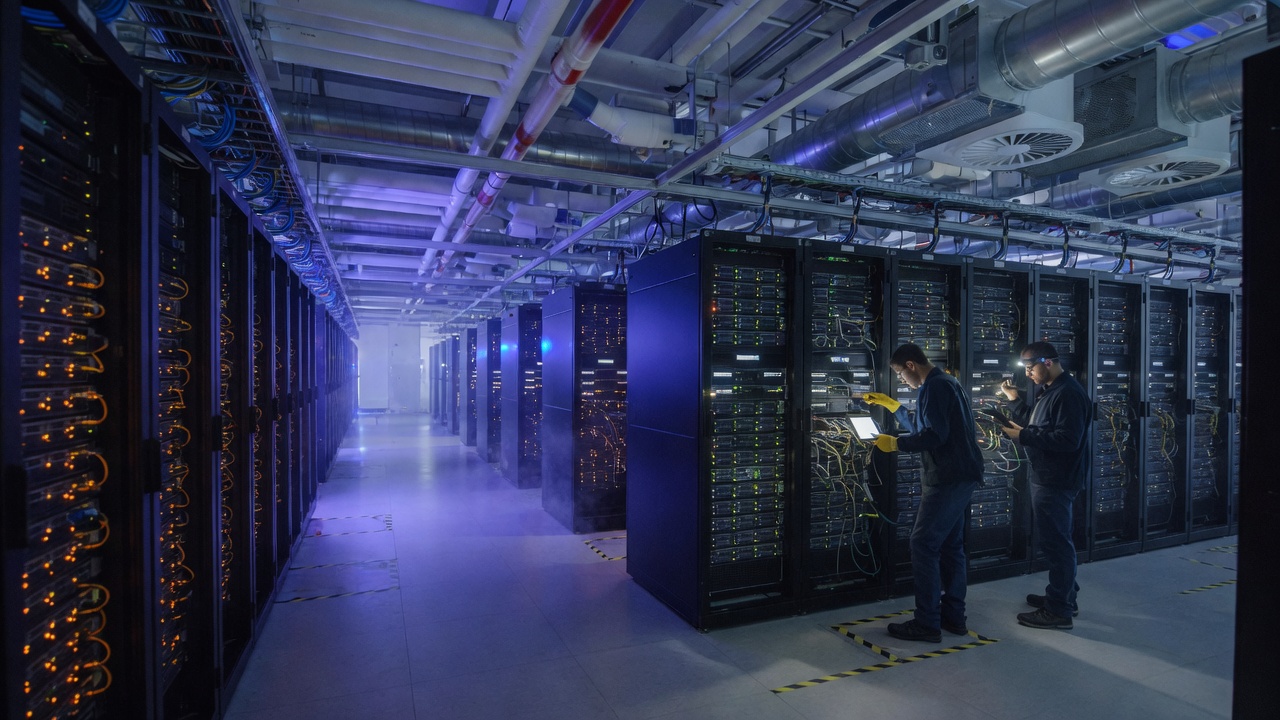
The four largest U.S. hyperscalers are on pace to spend roughly $725 billion on capital expenditures in 2026 — and the gap between that number and demonstrated AI revenue is now the central question in tech markets. Amazon just raised its 2026 cash capex guidance to about $220 billion, citing higher memory costs, while Microsoft lifted its full-year 2026 figure to a range of $195 billion to $205 billion, up from earlier estimates near $175 billion, according to The Register. Goldman Sachs projects global AI investment will top $1 trillion in 2026, with roughly $581 billion of that inside the U.S. alone.
Why it matters
This is no longer a story about R&D budgets — it’s a macro-scale capital story. When four companies’ infrastructure spending approaches $725 billion in a single year, AI capex vs revenue credibility becomes a market-moving variable, not a footnote in earnings calls. Investors have started pricing hyperscaler stocks partly on whether AWS, Azure, and Google Cloud can convert that spend into AI-driven revenue growth fast enough to justify it. Artificial Finance’s framing — that AI infra spend is now big enough to move equity markets — is the tell: capex guidance revisions are being read the way GDP prints or rate decisions used to be.
The numbers, tracked
| Entity | 2026 Capex / Investment Estimate | Source |
|---|---|---|
| Amazon | ~$220B cash capex (revised up, memory-cost driven) | The Register |
| Microsoft | ~$195B–$205B (up from ~$175B prior estimate) | The Register |
| Top 4 U.S. hyperscalers combined | ~$725B | Artificial Finance |
| Global AI investment | >$1 trillion | Goldman Sachs |
| U.S. share of global AI investment | ~$581B | Goldman Sachs |
Treat this table as a living reference point, not a final tally — capex guidance has moved upward at least twice in recent quarters for both Amazon and Microsoft, and further revisions are likely as fiscal-year numbers firm up.
Cloud GPU economics: the memory squeeze
Amazon’s explicit citation of higher memory costs as a driver of its capex increase is a builder-relevant detail easy to miss in headline coverage. Cloud GPU economics aren’t just about chip supply anymore — HBM and DRAM pricing pressure is now flowing directly into hyperscaler cost structures, and by extension into the pricing of GPU instances, managed AI services, and enterprise inference contracts. For teams budgeting AI infrastructure for 2026, this means:
- Assume unit compute costs may not fall as fast as GPU generation upgrades alone would suggest.
- Watch AWS and Azure pricing pages for mid-cycle adjustments tied to memory-heavy instance types.
- Long-term reserved-capacity contracts may look more attractive as hyperscalers pass through input costs rather than absorb them.
Litigation trackers: the other living dataset
While capex numbers get the market’s attention, a parallel data story is accumulating in courtrooms. One live tracker, cited by The World of AI and last verified August 20, 2026, is following 103 major AI lawsuits with daily docket checks. A separate database from Valor International shows U.S. AI lawsuits growing from just 3 in 2020 to 200 by July 31, 2026 — a roughly 66x increase in six years. These litigation trackers matter for the same reason capex trackers do: they turn scattered news into a running accountability ledger, letting builders and investors see exposure trends rather than one-off headlines. For companies deploying AI products, rising litigation volume is a signal to budget for compliance and legal review the same way infra teams budget for GPU cost inflation.
News, view, and the honest disagreement
News: Capex guidance is rising across Amazon and Microsoft, and Goldman’s trillion-dollar 2026 forecast is now the consensus framing for global AI investment scale.
View: The spending itself isn’t irrational — training and serving frontier models at scale genuinely requires this level of infrastructure, and memory-cost pass-through is a real supply constraint, not manufactured urgency.
Disagreement worth noting: Skeptics argue that rising capex guidance revisions, revised upward twice in some cases within a year, suggest hyperscalers are still guessing at demand rather than responding to confirmed revenue — meaning today’s $725 billion combined figure could just as easily be revised down if AI product monetization disappoints in 2026 earnings reports. Neither side has a definitive data point yet; that’s precisely why this remains a tracker story rather than a settled one.
What to watch next
- Q4 2025 and Q1 2026 earnings calls from Amazon, Microsoft, Google, and Meta for further capex revisions.
- Memory/HBM pricing trends from Samsung, SK Hynix, and Micron as a leading indicator for hyperscaler cost pass-through.
- Growth rate of the 103-lawsuit and 200-lawsuit trackers as a proxy for regulatory and legal risk accumulating around AI deployment.