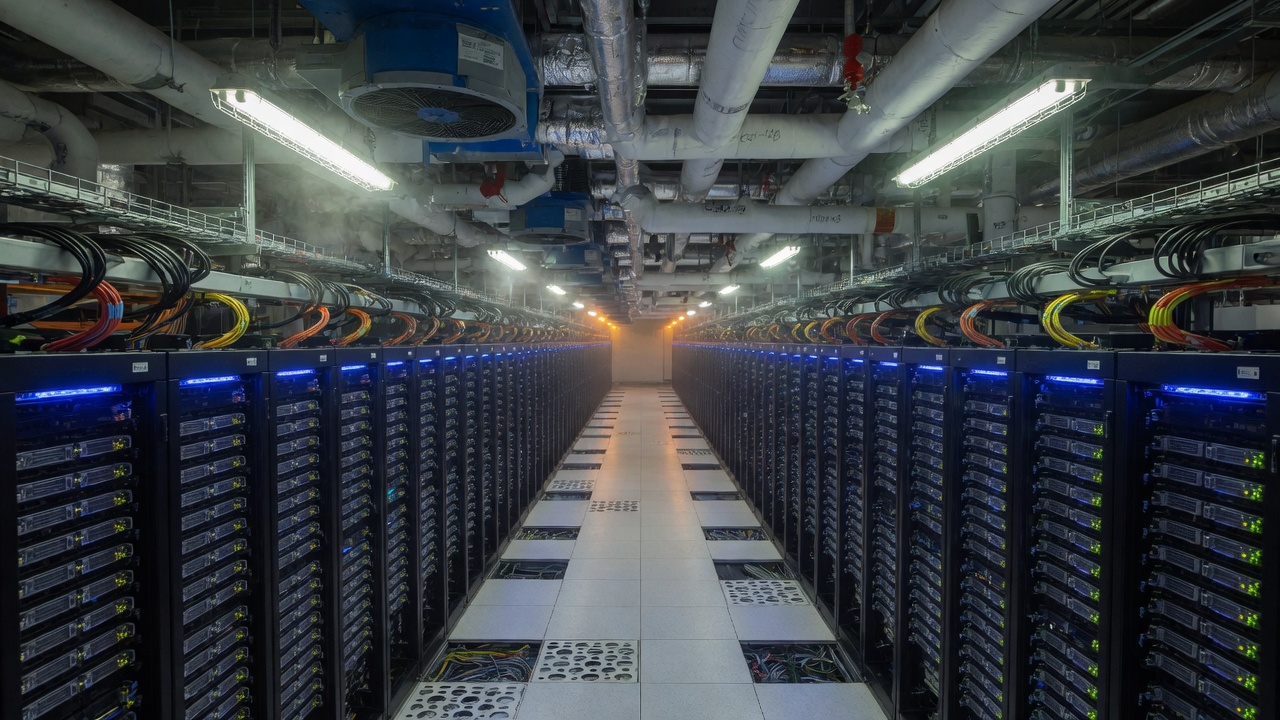
Five companies are on pace to spend $700B-$900B on AI infrastructure in 2026 alone, and the revenue to justify it still isn’t there. That’s the gap markets are now pricing in real time — not as a distant risk, but as the central question for every AI-linked stock and every builder trying to figure out what their GPU bill will look like in 18 months.
This piece is designed as a running tracker, not a one-off rumor roundup. We’ll update the core numbers as hyperscalers report earnings and analysts revise models, so bookmark it if you’re watching AI capex vs revenue as a trade or a budgeting problem.
Why it matters
The AI industry’s bull case has always rested on a bet: infrastructure spend now converts into cash flow later. That bet is getting harder to model. According to Forbes, citing CreditSights, Amazon, Microsoft, Alphabet, Meta, and Oracle are combining for an estimated $700B-$900B in 2026 capex, with roughly 75% tied directly to AI infrastructure — GPU clusters, custom silicon, data centers, and the power and cooling systems needed to run them. Goldman Sachs’ baseline is more conservative but still enormous: $765B in annual AI capex for 2026, climbing to $1.6 trillion by 2031. That trajectory only makes sense if AI usage — enterprise adoption, consumer subscriptions, API revenue — scales at a comparable rate. So far, it hasn’t.
The current numbers (updated as of this reporting cycle)
| Metric | Figure | Source |
|---|---|---|
| Combined 2026 capex (Amazon, Microsoft, Alphabet, Meta, Oracle) | $700B-$900B | CreditSights via Forbes |
| Share of that spend tied directly to AI infrastructure | ~75% | Forbes |
| Goldman Sachs’ 2026 AI capex baseline | $765B | Goldman Sachs |
| Goldman Sachs’ 2031 AI capex projection | $1.6T | Goldman Sachs |
| Big tech infrastructure spend, last year vs. this year | $450B → ~$900B | The Economist |
| Debt raised this year to fund the buildout | $400B+ | The Economist |
What’s driving the gap
- Spend is compounding faster than revenue. The Economist puts last year’s infrastructure spend by the largest tech companies at roughly $450B, doubling to about $900B this year. Revenue from AI products — copilots, API calls, enterprise licensing — hasn’t doubled in tandem at any major provider.
- Debt is entering the picture. More than $400B in borrowing this year, per The Economist, marks a shift from cash-funded buildouts to leveraged ones. That changes the risk profile: a slowdown in AI demand now hits balance sheets, not just margins.
- Capex-to-revenue ratios are at decade highs. American Century flags this explicitly, framing the mismatch between infrastructure spending growth and revenue growth as the key variable to watch heading into 2026 earnings.
- The buildout is now multi-year by design. Goldman’s $1.6T 2031 estimate signals that banks are modeling AI capex as a structural cycle — closer to telecom fiber buildouts or cloud infrastructure’s early years — rather than a short-term GPU shortage response.
What it means for builders
If you’re shipping AI products rather than analyzing the market from the sidelines, this tracker matters for one practical reason: cloud GPU economics flow downstream. Hyperscalers financing hundreds of billions in infrastructure via debt and thinner near-term returns tend to pass costs through — via compute pricing, API rate changes, or tighter free-tier limits — once investor patience narrows. Teams building on frontier-model APIs should watch capex-to-revenue disclosures the way they’d watch a supplier’s balance sheet: a leading indicator for pricing stability, not just a macro curiosity.
Utilization also matters more than raw GPU count. Companies that can show high, sustained utilization of their AI infrastructure — not just deployed capacity — are the ones likeliest to defend margins if the financing environment tightens. That’s the number to ask about in vendor conversations, not headline cluster size.
The honest counter-argument
Bulls have a real case: infrastructure cycles historically look overbuilt right before demand catches up, and cloud computing followed a similar pattern in the early 2010s before revenue scaled into the spend. If enterprise AI adoption inflects sharply — through agents, coding tools, or vertical applications reaching broad deployment — today’s capex-to-revenue ratios could look conservative in hindsight rather than alarming. The risk is timing, not direction: whether cash flow arrives before debt service and depreciation schedules bite.
What we’re watching next
- Q4/full-year earnings from Amazon, Microsoft, Alphabet, and Meta for updated 2026 capex guidance
- Oracle’s cloud infrastructure backlog disclosures, given its outsized leverage exposure
- Any downward revision to Goldman Sachs’ or CreditSights’ capex models as a signal of tightening investor tolerance
- Enterprise AI revenue growth rates relative to the ~75% AI-infrastructure share of hyperscaler capex